Rhinoplasty Surgeon in Navi Mumbai for Nose Reshaping & Facial Balance

Choosing a rhinoplasty surgeon is an important decision because the nose plays a central role in both facial appearance and nasal function.
Rhinoplasty, also called nose reshaping or a nose job, is a surgical procedure that can modify the shape, size, projection, structure, or proportions of the nose. Depending on the patient’s needs, it may address cosmetic concerns, functional problems affecting breathing, or both.
If you are looking for a rhinoplasty surgeon in Navi Mumbai, treatment planning should consider your nasal anatomy, facial proportions, skin and soft-tissue characteristics, breathing function, previous surgery, and personal aesthetic goals.
Dr. Vinod Vij is a plastic and cosmetic surgeon practicing in Navi Mumbai, with more than 30 years of experience in plastic, cosmetic, and reconstructive surgery. His published qualifications include MBBS, MS in General Surgery and MCh in Plastic Surgery.
The goal of rhinoplasty should be appropriate structural correction and facial balance rather than simply making the nose smaller or changing it to a predetermined shape.
Discover the right approach for your nose and facial profile
Explore the various rhinoplasty procedures tailored to specific needs and goals.
Types of Rhinoplasty
Open Rhinoplasty: Open rhinoplasty involves a small incision across the columella, the tissue between the nostrils, along with internal nasal incisions. It provides the surgeon with greater visibility of the underlying nasal structures and may be appropriate when more detailed reshaping is required.
Closed Rhinoplasty: In closed rhinoplasty, the incisions are made inside the nostrils. This approach may be suitable for selected cases where the required changes can be performed through an internal approach.
Tip Plasty: Tip plasty focuses on reshaping or refining the nasal tip. It may be considered when the main concern is the shape, projection, or definition of the nasal tip.
Septorhinoplasty: Septorhinoplasty combines nasal reshaping with correction of the nasal septum. It may be considered when both the external appearance of the nose and internal structural or breathing concerns need to be addressed.

Liquid Rhinoplasty: Liquid rhinoplasty uses injectable dermal fillers to temporarily modify selected minor contour irregularities. It is not a substitute for surgical rhinoplasty and is not suitable for every nasal concern.
For personalized advice about rhinoplasty surgery in Navi Mumbai, consult Dr. Vinod Vij for an assessment of your nasal structure, facial proportions, treatment goals, and available options.
Now that we’ve explored the different types of rhinoplasty, let’s delve into the rhinoplasty cost in Navi Mumbai.
Rhinoplasty for Men and Women
Rhinoplasty can be performed for both men and women.
However, the desired aesthetic characteristics may differ between individuals.
Treatment planning should consider:
- Facial proportions
- Nasal width
- Bridge shape
- Tip characteristics
- Nasolabial angle
- Skin thickness
- Existing nasal anatomy
- Individual aesthetic preferences
The objective should be an appropriately proportioned nose rather than applying one standard shape to every patient.
Rhinoplasty for a Crooked or Asymmetrical Nose
A crooked nose can result from natural anatomy, previous trauma, or structural changes.
Correction may involve more than simply changing the external appearance. Depending on the cause, treatment may require modification of nasal bones, cartilage, septal structures, or other supporting tissues.
Complete symmetry may not always be achievable, particularly when significant pre-existing asymmetry is present.
Revision Rhinoplasty in Navi Mumbai
Revision rhinoplasty is performed when a patient has undergone previous nasal surgery and continues to have cosmetic or functional concerns.
Revision cases can be more complex because previous surgery may have resulted in:
- Scar tissue
- Altered cartilage
- Reduced structural support
- Changes in nasal shape
- Breathing problems
- Asymmetry
The surgeon must assess the remaining nasal structures before deciding whether revision surgery is appropriate.
In some cases, additional cartilage or graft material may be required to provide structural support.
Now that we’ve explored the different types of rhinoplasty, let’s delve into the rhinoplasty cost in Navi Mumbai.
Cost Of Rhinoplasty Surgery in Navi Mumbai
| Type | Cost |
| Open Rhinoplasty | ₹80,000 to ₹1,50,000 |
| Closed Rhinoplasty | ₹70,000 to ₹1,30,000 |
| Tip Plasty | ₹60,000 to ₹1,20,000 |
| Septorhinoplasty | ₹90,000 to ₹1,70,000 |
| Revision Rhinoplasty | ₹1,50,000 to ₹2,50,000 |
| Liquid Rhinoplasty | ₹20,000 to ₹40,000 |
Are you considering a rhinoplasty in Mumbai? Please consult Dr. Vinod Vij for a personalized assessment and accurate cost estimation for your rhinoplasty procedure.
Dr. Vij has conducted several nose job surgeries in Mumbai to enhance the appearance and functionality of his patients. He is known to his countless happy patients as the top rhinoplasty surgeon in Navi Mumbai.
The rhinoplasty cost in Navi Mumbai can vary based on different factors.
Factors influencing nose plastic surgery cost in Navi Mumbai:
- Surgeon’s Expertise: Highly experienced surgeons may charge more for their skills and reputation.
- Type of Rhinoplasty: The complexity of the procedure, whether open or closed rhinoplasty, can affect costs.
- Hospital or Clinic Fees: The facility where the surgery takes place can impact the overall cost.
- Anesthesia: The type of anesthesia used during the procedure can influence expenses.
- Geographical Location: Rhinoplasty costs can vary significantly between cities and regions.
- Pre-operative Tests: These may include lab tests, imaging, and consultations.
- Post-operative Care: Follow-up appointments and aftercare expenses should be considered.
Experience the Art of Rhinoplasty with Dr. Vinod Vij
Begin your journey to nasal enhancement with an expert personalized assessment.
Now, let’s dive into a crucial factor: the remarkable success rates of rhinoplasty procedures!
Success Rate Of Rhinoplasty

- Surgeon’s Expertise: The experience and skill of the surgeon play a significant role in the procedure’s success.
- Patient Expectations: Clear communication between the patient and surgeon regarding expectations and goals is vital.
- Patient’s Health: A patient’s overall health and well-being can impact the healing process and, consequently, the nose job success rate.
- Nasal Anatomy: The unique structure of the patient’s nose and the complexity of corrections needed can affect the outcome.
- Follow-Up Care: Proper post-operative care and adherence to the surgeon’s instructions are crucial for success.
- Type of Rhinoplasty: Different rhinoplasty procedures may have varying success rates. For example, the revision rhinoplasty success rate depends on how well the surgeon addresses the previous issues.
- Patient’s Commitment: A patient’s commitment to recovery and post-operative care is essential.
- Complications: Complications, such as infections or scarring, can impact the success rate.
- Individual Variability: Each patient’s unique physiology and response to surgery can influence the outcome.
- Choice of Surgeon: Selecting a qualified and experienced surgeon, like Dr. Vinod Vij, can significantly affect the success of rhinoplasty.
Research indicates that approximately 85% – 90% of individuals are satisfied with the outcomes after rhinoplasty. In some cases, about 10% – 15% may require a follow-up procedure.
The success rate tends to be even higher when a specialized, board-certified plastic surgeon like Dr. Vinod Vij performs rhinoplasty.
Are you wondering why someone may need a nose operation? Continue reading to find out who is an ideal candidate for a Rhinoplasty.
Ideal Candidate For Rhinoplasty
Hear expert insights from Dr. Vinod Vij about rhinoplasty and nose surgery by clicking this YouTub link.
An individual may consider rhinoplasty if they are concerned about the appearance or function of their nose, such as:
- A nose that appears disproportionate to the rest of the face
- A visible bump or irregularity on the nasal bridge
- A nose that appears broad from the front
- A drooping or poorly defined nasal tip
- An enlarged or rounded nasal tip
- Wide or flared nostrils
- A crooked or off-centre nose
- Nasal asymmetry following an injury
- Certain structural problems that affect nasal breathing
A suitable candidate for rhinoplasty generally:
- Has realistic expectations about what surgery can and cannot change.
- Is in suitable overall health for surgery and healing.
- Has reached an age at which nasal and facial growth is substantially complete.
- May have functional concerns such as difficulty breathing related to the nasal septum or other nasal structures.
Rhinoplasty is not appropriate for everyone. A consultation with a qualified plastic surgeon is important to determine whether surgery is suitable and which approach best addresses your concerns.

Are you concerned about the recovery process? Let us discuss the nose job recovery process.
Nose Job Recovery:
- Immediate Post-Op: You’ll have a bandage on your nose and might feel groggy from anesthesia.
- First Week: Swelling and bruising are common. Follow your surgeon’s instructions for pain management.
- Two Weeks: Stitches may be removed, and swelling starts to decrease.
- One Month: Most visible swelling and bruising should be gone.
- Three Months: Nose shape continues to refine.
- Six Months: Final results become more apparent.
- One Year: Nose fully settles into its new shape.
Remember, everyone’s recovery is unique. Follow your surgeon’s advice for the best results.
Would you like to make your recovery as smooth as possible? Don’t worry; here are some tips to aid you.
Nose Job Recovery Care:
- Adhere to your surgeon’s guidance for post-operative care.
- Get plenty of rest to aid healing.
- Sleep with your head elevated to reduce swelling.
- Refrain from vigorous exercise and heavy lifting.
- Take prescribed medications as directed for pain and swelling.
- Avoid touching or picking at your nose to prevent infection.
- Follow a soft diet if needed to avoid any pressure on the nose.
- Shield your nose from the sun with a hat or sunscreen.
- Keep scheduled appointments with your surgeon for progress checks.
- Be patient, as full recovery can take time.
Why Choose Dr. Vinod Vij for Rhinoplasty in Navi Mumbai?
Choosing a rhinoplasty surgeon involves more than selecting a doctor based on a “best surgeon” ranking.
Important considerations include:
- Plastic surgery qualifications
- Experience with nasal surgery
- Understanding of nasal anatomy
- Experience with cosmetic and functional concerns
- Personalised treatment planning
- Clear communication about limitations and risks
- Appropriate surgical facilities
- Follow-up care
Dr. Vinod Vij is a plastic and cosmetic surgeon practicing in Navi Mumbai. The clinic’s published profile lists MBBS, MS – General Surgery, and MCh – Plastic Surgery, along with more than 30 years of experience in plastic, cosmetic, and reconstructive surgery.
His clinical practice includes rhinoplasty and other facial aesthetic procedures. The treatment approach described by the clinic emphasises individual assessment, personalised planning, patient safety, and natural-looking outcomes.
You can learn more about Dr. Vinod Vij – Plastic & Cosmetic Surgeon in Navi Mumbai.
Testimonials


The experience was excellent. Dr. Vinod and his team have helped me with my Laser Hair Reduction treatment. I was a little anxious before the procedure. They reassured me and made me feel at ease throughout the entire process. They also provide the best after care advice and remind me to follow up with them regularly. They have the most advanced technology and equipments which made the procedure completely painless.
I would definitely recommend Dr. Vinod, the team and Clinique Aesthetica for all the skin related issues.


Thank you.

Thank you.

Experience regarding laser is good.

Experience regarding laser is good.



My son (7 yrs old) had surgery on nose a month back. He had cyst on nose bridge. We were worried that he should not suffer during/after surgery. And everything went smooth and much better than we thought. The cut on nose bridge is made such a way that it is not visible easily and with minimum stitches. Medicine given was bare minimum required. The staff is also very cooperative.
And now after a month, the scar on nose is almost invisible with medication. Had no pain or any issues during this period. Now By looking at nose it feels like only a scratch and no surgery is performed.
We are very happy with treatment..
Thank you doctor, team and entire staff.



Dr. Vinod Sir is really a great in his profession as well as an individual. One of the best doctor with perfect diagnosis and treatment, very kind, polite and soft spoken behaviour. I had surgery in left hand ulnar nerve. I made a speedy recovery because of him. Inspite of having a very busy schedule Sir always manage to give personal attention to his every patient and never neglect the patient even while dressing the wounds and normally addressing the reports.
His treatment is very effective and accurate.
The staff is very good, politely addresses your queries manage your appointments.
The infrastructure is very nice & cleanliness is well maintained in every corner.
Thank you so much Sir
& Thank you so much to the entire staff

The facility is so clean and sterile. The staff is friendly and answered all my questions before my surgery.
Overall Ratings 5/5 for Clinique Aesthetica; would definitely recommend!!!!

Thanks sir for everything 😇
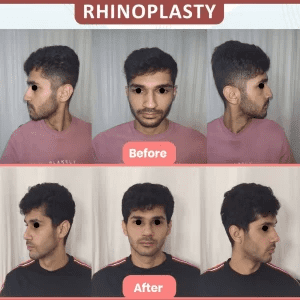
Discover Your Perfect Nose, Schedule an appointment with Dr. Vinod Vij.
Before & After Surgery
Frequently Asked Questions:
Rhinoplasty is surgery to reshape or reconstruct the nose. It may be performed for cosmetic concerns, functional problems, or both.
Rhinoplasty is performed under appropriate anaesthesia, so pain is controlled during surgery. Swelling, congestion, tenderness, and discomfort can occur during recovery.
You should avoid unnecessary touching, rubbing, or pressure on your nose during the early healing period. Follow your surgeon's instructions regarding cleaning, dressing, and when normal contact is safe.
The rhinoplasty approach is selected according to the patient's nasal anatomy, functional concerns, previous surgery, and aesthetic goals.
- Preoperative Preparation
- Consultation: Discuss your concerns, medical history, expectations, and treatment goals.
- Planning: The nose and facial proportions are assessed and the surgical plan is developed.
- Health Assessment: Your suitability for surgery is evaluated.
- Anesthesia
- Appropriate anesthesia is administered according to the planned procedure and individual requirements.
- Incision
- Closed Rhinoplasty: Incisions are made inside the nostrils.
- Open Rhinoplasty: An additional incision is made across the columella when required.
- Reshaping the Nose Structure
- Modification: Bone and cartilage may be reshaped, repositioned, reduced, or supported as required.
- Septoplasty: The nasal septum may be corrected when functional treatment is required.
- Tip Reshaping: The nasal tip may be refined or repositioned according to the treatment plan.
- Closing the Incisions
- The incisions are carefully closed after the planned structural changes are completed.
- Application of Splints and Dressings
- External Splint: An external splint may be used to support and protect the nose during early healing.
- Internal Splints/Packing: These may be used in selected cases depending on the procedure.
- Postoperative Care
- Recovery: You will be monitored after surgery according to the anesthesia and procedure performed.
- Instructions: You will receive guidance regarding medicines, wound care, activity, and follow-up.
- Managing Side Effects: Swelling, bruising, and congestion are managed according to your surgeon's recommendations.
- Follow-Up Visits
- Regular follow-up appointments help monitor healing and address any concerns during recovery.
- Final Results
- Healing: Swelling gradually decreases over the weeks and months following surgery.
- Outcome Evaluation: The final result is assessed as the nose continues to settle and heal, with the timeline varying between individuals.
Initial recovery generally takes several weeks, while swelling—particularly subtle nasal swelling—can continue to settle for considerably longer.
Rhinoplasty may have temporary side effects like swelling, bruising, and congestion. Serious complications are rare when performed by a skilled surgeon.
Preoperative Preparation
- Consultation: Discuss goals, medical history, and expectations with the surgeon.
- Planning: Take photographs and plan the surgery.
- Health Assessment: Ensure patient is fit for surgery.
Anesthesia
- Administer general anesthesia or local anesthesia with sedation.
Incision
- Closed Rhinoplasty: Incisions inside the nostrils.
- Open Rhinoplasty: Incision across the columella.
Reshaping the Nose Structure
- Modification: Remove or add bone/cartilage as needed.
- Septoplasty: Straighten deviated septum if necessary.
- Tip Reshaping: Refine the nasal tip.
Closing the Incisions
- Suturing: Close the incisions and redrape nasal tissues.
Application of Splints and Dressings
- External Splint: Place on the outside to support new shape.
- Internal Splints/Packing: Sometimes used to stabilize the septum.
Postoperative Care
- Recovery: Monitor in recovery room post-surgery.
- Instructions: Care for surgical site, medications, and follow-up visits.
- Managing Side Effects: Use medications and cold compresses.
Follow-Up Visits
- Regular check-ups to monitor healing and remove sutures if needed.
Final Results
- Healing: Swelling and bruising subside within weeks; full results in 6-12 months.
- Outcome Evaluation: Ensure patient satisfaction with results.